Newsletter Subscribe
Enter your email address below and subscribe to our newsletter

 ByJohn A
Industrial facilities rely on cooling systems to maintain process temperatures, protect equipment, and support consistent production. Cooling can represent a significant part of a facility’s energy demand, particularly where operations run for extended hours. Conventional vapour compression chillers use electrically driven compressors, which can increase operating costs when cooling requirements remain high.
At the same time, industrial processes often generate heat that is rejected through cooling water, exhaust streams, and other utility systems. Some of this heat may be suitable for recovery and reuse. Converting available waste heat into useful cooling offers an opportunity to improve overall energy utilisation.
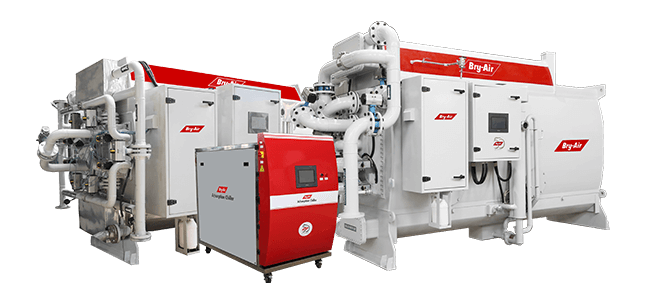
Bry-Air is a manufacturer of industrial moisture-control and energy recovery technologies. Its Adsorption Chiller Manufacturers product page describes systems that use silica gel as an adsorbent and water as a refrigerant to produce chilled water from suitable low-grade heat sources. The technology can support process cooling and heating, ventilation, and air conditioning applications when the site’s heat supply and cooling demand are compatible.
An adsorption chiller uses a solid material to attract water vapour and a refrigerant to generate cooling. In Bry-Air’s system, specially developed silica gel acts as the adsorbent, while water serves as the refrigerant.
The process takes place under a vacuum, allowing water to evaporate at a low temperature. As the water evaporates in the evaporator, it absorbs heat from the chilled water circuit, reducing the water temperature for use in the required application.
The silica gel captures the resulting water vapour. When the material becomes loaded with moisture, heat is applied to release the vapour. This regeneration stage allows the system to continue operating without relying on an electrically driven compressor as its primary cooling mechanism.
An adsorption chiller generally includes an evaporator, a condenser, and two adsorption chambers. The chambers operate alternately so that one can adsorb water vapour while the other is regenerated using heat.
After leaving the adsorption chamber, water vapour moves to the condenser, where it releases heat and returns to liquid form. The liquid refrigerant then returns to the evaporator, where the cooling cycle continues.
Alternating the adsorption chambers helps maintain cooling output while the desiccant is regenerated. System performance depends on factors such as heat-source temperature, cooling-water conditions, chilled-water requirements, and the design of the equipment.
Adsorption chillers are designed to make use of suitable thermal energy that might otherwise be rejected. Depending on the installation, the heat source may include industrial process waste heat, hot water from equipment cooling circuits, or solar thermal energy.
Bry-Air’s industrial adsorption chiller information describes the use of low-grade heat in the approximate range of 50°C to 100°C, depending on system design and operating conditions. The actual usable range should be confirmed against the selected model’s specifications.
A consistent heat source is particularly valuable when the cooling demand also remains relatively stable. If the available heat varies significantly, engineers must determine how this affects cooling capacity and whether supplementary cooling is required.
Conventional chillers use compressors to drive the refrigeration cycle. Adsorption chillers use heat to drive their cycle and generally require electricity for auxiliary equipment such as pumps and controls.
When suitable waste heat is available, this approach can reduce the electrical demand associated with cooling. However, the total benefit depends on the performance of the complete installation, including pumps, cooling towers, heat recovery equipment, and other supporting systems.
Facilities should compare total energy consumption under equivalent operating conditions. This provides a more accurate assessment than comparing compressor electricity alone.
Industrial processes often release heat through hot water, exhaust gases, condensate, and equipment cooling circuits. Some of these streams may provide enough thermal energy to operate an adsorption chiller.
Using recovered heat can improve the utilisation of energy already consumed by the facility. It may also reduce the need to generate additional electricity for cooling, depending on the site’s existing energy infrastructure.
Before installation, engineers should assess the temperature, flow rate, operating hours, and stability of the available heat source. They should also consider whether the heat is already being used for another purpose, as competing heat demands can affect project feasibility.
Bry-Air’s adsorption chiller technology uses water as the refrigerant and silica gel as the adsorbent. Water has no ozone depletion potential and a very low direct global warming impact as a refrigerant.
Environmental performance also depends on the energy used to supply the driving heat and operate auxiliary equipment. Recovering otherwise wasted heat can reduce the need for additional energy, potentially lowering associated emissions.
Facilities should quantify these benefits using measured energy consumption, the source of recovered heat, and appropriate emissions factors. This makes it possible to assess environmental improvements using site-specific information rather than general claims.
Chemical and petrochemical facilities may generate heat through process equipment, condensate streams, furnaces, and other thermal operations. Where suitable heat is available, an adsorption chiller can convert part of that energy into chilled water.
The cooling output may support selected process duties or air-conditioning systems. The installation must be designed around the temperature and flow rate of the heat source, the required chilled-water temperature, and the plant’s operating schedule.
Power plants and industrial utility systems can produce recoverable heat through engines, turbines, and related equipment. Adsorption cooling may help use a portion of this thermal energy to meet cooling requirements.
The potential benefit depends on how much usable heat is available, whether the supply is continuous, and how closely it aligns with cooling demand. System integration must also account for changes in load and scheduled maintenance.
Food and beverage processing, pulp and paper production, automobile manufacturing, and other industrial sectors may require chilled water for equipment or process temperature control.
Where the necessary heat source exists, adsorption cooling can provide an additional option for meeting these requirements. Hygiene standards, process conditions, chilled-water temperature, and the consequences of cooling interruptions should be considered during system design.
The first step is to calculate the required cooling load. Engineers should evaluate peak demand, normal operating conditions, chilled-water supply and return temperatures, and expected changes in production.
The available heat source must be assessed at the same time. A chiller cannot consistently provide its intended output if the driving heat is insufficient or unsuitable for the selected configuration.
Bry-Air’s published industrial adsorption chiller range includes capacities from 35 kW to 1,180 kW. The appropriate model depends on the application, heat availability, cooling demand, and required operating conditions.
Adsorption chillers require suitable connections to the heat source, chilled-water circuit, and condenser cooling water system. The temperature and flow rate of cooling water can affect the equipment’s performance.
Engineers should review cooling tower capacity, seasonal water temperatures, piping requirements, installation space, electrical connections, and integration with existing controls. Maintenance access should also be considered during the design stage.
A complete technical review helps identify installation constraints and supports more accurate performance expectations.
The initial equipment cost should be considered alongside installation expenses, auxiliary electricity, maintenance, and expected operating hours. The availability of recovered heat and the amount of conventional cooling electricity avoided are also important financial factors.
Savings will vary according to the existing cooling system, energy prices, operating schedule, and consistency of the heat source. A lifecycle cost analysis helps determine whether adsorption cooling is economically suitable for the facility.
Selecting experienced Adsorption Chillers specialists can help businesses evaluate the relationship between heat recovery and cooling demand. A suitable solution should be based on the actual operating conditions rather than rated capacity alone.
Bry-Air offers adsorption chiller systems based on silica gel and water technology for industrial cooling and HVAC applications. Its published product information highlights low electricity consumption, low noise and vibration, and the use of recovered heat as key features.
Before finalising an installation, businesses should request technical information for the intended operating conditions, clarify the expected cooling output, and establish commissioning and maintenance requirements. Performance should be assessed using measurable energy and operating data after installation.
Adsorption chillers can help industrial facilities improve energy utilisation by converting suitable waste heat into useful cooling. By reducing reliance on compressor-driven refrigeration, the technology may lower electricity demand when a compatible heat source and consistent cooling requirement are available.
Successful implementation requires careful assessment of cooling capacity, heat-source temperature, cooling-water conditions, installation requirements, and lifecycle costs. The technology is not automatically suitable for every facility, so a detailed technical and financial evaluation is essential.
Businesses looking to improve cooling efficiency should identify recoverable heat sources and determine whether they can reliably meet the required cooling load. To discuss industrial cooling requirements, heat recovery opportunities, and suitable system configurations, visit Bry-Air’s Contact Us page.