Newsletter Subscribe
Enter your email address below and subscribe to our newsletter

 Byadmin
Botanical gardens, arboretums, and outdoor attractions create a different kind of restroom-planning challenge than fairs, concerts, or sports tournaments. Guests are often spread across trails, lawns, gardens, exhibits, overlooks, children’s areas, event spaces, visitor centers, and seasonal displays. Crowds may move slowly, stop frequently, and expect the site to feel peaceful, clean, and well cared for.
For attraction managers, portable restroom planning needs to support guest comfort without disrupting the setting. Units should be easy to find, accessible, serviceable, and positioned in a way that protects landscaping, pathways, and the overall visitor experience. A good plan makes restroom access feel natural instead of making it the detail guests remember for the wrong reason.
Outdoor attractions usually have defined visitor paths. Guests may enter through a main gate, stop at a ticket booth or visitor center, follow loop trails, visit themed gardens, walk to overlooks, attend outdoor programs, or gather near picnic and event areas.
Restroom placement should follow those movement patterns. A single restroom area near the entrance may not be enough if guests spend most of their visit deep inside the grounds. Attraction managers should look at where guests slow down, where families gather, where tours pause, and where people may be farthest from permanent facilities.
This is especially important for large properties where guests may not want to walk 15 or 20 minutes back to the visitor center.
Botanical gardens and arboretums often host many kinds of events. A weekend plant sale, wedding, outdoor concert, school field trip, art walk, garden festival, holiday light display, or lecture series can change restroom demand quickly.
A small daytime tour may only need light supplemental restroom support. A nighttime lights event may require units near parking, ticketing, food stations, and high-traffic walking loops. A wedding or private rental may need restrooms near the ceremony site, reception tent, and vendor area.
Attraction managers should not rely on one standard layout for every event. Portable restroom placement should be adjusted based on crowd size, guest profile, schedule, and how much of the property will be open.
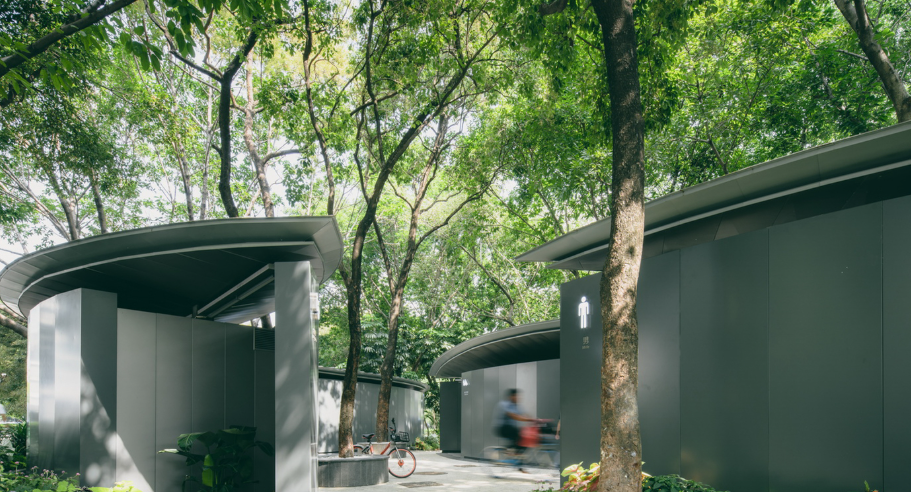
Guests visit outdoor attractions for beauty, quiet, shade, scenery, and a sense of escape. Restroom placement should support the experience without visually overpowering it.
Units should be placed where they are convenient but not directly in the middle of garden views, photo spots, ceremony backdrops, sculpture areas, or high-value landscape displays. Screening with existing structures, fencing, plantings, or temporary barriers can help, as long as the units remain visible enough for guests to find.
Managers should think carefully about sightlines from entrances, patios, overlooks, wedding lawns, and main photo locations. A practical restroom setup should not become the focal point of a carefully designed outdoor space.
Accessible restroom planning is especially important at outdoor attractions because ground conditions vary. Paved paths, compacted gravel, turf, mulch, slopes, bridges, and garden edges all affect how easy facilities are to reach.
Accessible units should be placed near stable, level surfaces whenever possible. They should connect to practical routes from parking, entrances, event spaces, and major attractions. If the only restroom option requires crossing wet grass or uneven ground, it may not serve guests well.
Managers should also consider wheelchairs, walkers, scooters, strollers, and guests with limited stamina. The best accessible restroom location is not only technically available; it is placed where guests can actually use it without difficulty.
Some parts of an outdoor attraction naturally keep guests in one place longer. These may include children’s gardens, picnic lawns, event tents, education spaces, amphitheaters, café areas, seasonal exhibits, butterfly gardens, model train displays, and conservatory entrances.
Restroom access should be strong near these high-dwell areas. Families with children, older guests, and tour groups may need facilities nearby when they are staying in one section of the property for an extended period.
For larger events, managers may coordinate portable toilet rental near temporary food areas, tented spaces, and special exhibit routes. This helps reduce pressure on permanent restrooms and prevents guests from leaving the event zone just to find facilities.
Portable restrooms need to be serviced, restocked, delivered, and removed. That requires vehicle access, but service activity should not interfere with the guest experience more than necessary.
Attraction managers should identify service routes before finalizing restroom placement. Units should not be tucked into garden areas where trucks must cross fragile lawns, narrow paths, root zones, or heavily planted beds. They also should not be placed where service crews must drive through crowded pedestrian routes during open hours.
For multi-day events, early-morning or after-hours service windows may be best. Planning these routes protects both the landscape and the visitor experience.
Outdoor attractions often have sensitive landscapes. Heavy foot traffic around restrooms can damage turf, compact soil, wear down mulch, or create muddy patches. Poor placement can also affect irrigation heads, edging, planting beds, tree roots, and decorative paths.
Restroom areas should be placed on durable surfaces whenever possible. If units must be near lawns or gardens, managers may need temporary mats, barriers, or planned queuing space to keep guests from walking through planted areas.
This matters most during rainy seasons, high-attendance weekends, or events where lines may form. A restroom cluster can unintentionally create landscape damage if the surrounding area is not protected.
Food and drink increase restroom demand. Outdoor attractions may host food trucks, café patios, wine walks, tasting events, picnic programs, vendor tents, or seasonal markets. Restrooms should be reasonably close to these areas while still separated enough to keep dining spaces pleasant.
Handwashing or hand-sanitizing stations can be useful near food areas, children’s programs, and hands-on garden activities. They are also helpful during events where guests handle plants, soil, crafts, or outdoor equipment.
Managers should think of sanitation as part of the guest-service plan around food and activities, not as a separate detail.
Botanical gardens and outdoor attractions often have seasonal attendance spikes. Spring blooms, summer concerts, fall festivals, holiday lights, plant sales, and special exhibits may draw much larger crowds than a normal weekday.
Restroom planning should scale with these peaks. Managers should review previous attendance patterns, ticket sales, event schedules, weather forecasts, and group bookings before deciding how much supplemental restroom capacity is needed.
Seasonal weather also matters. Heat may increase beverage consumption. Rain may limit where units can be placed. Cold-weather events may require extra attention to lighting, walking surfaces, and guest comfort after dark.
See Also: Safe Driving Techniques for Learner Drivers in Berwick and Casey
Guests should be able to find restrooms without interrupting staff or wandering off the main path. Signs should be clear at major decision points, including entrances, trail intersections, event lawns, food areas, parking paths, and visitor-center exits.
At the same time, outdoor attractions often avoid visual clutter. Signage should match the character of the site as much as possible. Simple, consistent directional signs can guide guests while preserving the property’s atmosphere.
Printed maps, event programs, websites, and mobile maps should also show restroom locations when the property is large or the event route is complex.
Outdoor restroom planning should not stop once units are placed. Managers should review cleanliness, supply levels, lines, ground conditions, visibility, and service access during the event.
If lines are forming in one section while another restroom area is underused, signage may need improvement. If mud is forming near a cluster, barriers or mats may need adjustment. If guests are asking the same question repeatedly, the location may not be clear enough.
Small corrections during an event can prevent complaints and help future planning.
Restroom planning for botanical gardens, arboretums, and outdoor attractions must balance practicality with guest experience. Facilities need to be close enough to serve visitors, but placed carefully enough to protect views, gardens, lawns, paths, and event spaces.
By mapping guest movement, planning for accessibility, protecting landscapes, supporting high-dwell areas, and keeping service access practical, attraction managers can create a cleaner and more comfortable experience. Thoughtful sanitation planning helps outdoor attractions handle events smoothly while preserving the peaceful setting guests came to enjoy.