Newsletter Subscribe
Enter your email address below and subscribe to our newsletter

 ByJohn A
Apartment communities in Boise, Idaho, can do more than provide a place to sleep. When they are planned around real routines, they can make it easier for residents to get to work, enjoy time outdoors, run errands, and feel part of the surrounding neighborhood. For project teams comparing residential needs with other property types, hotel construction specialists in Boise may also recognize how clear circulation, durable finishes, welcoming common areas, and reliable building systems improve the daily experience.
That matters in a city shaped by four seasons, warm sunny stretches, winter weather, access to the Boise River, and the nearby foothills. A successful apartment community should balance privacy with opportunities for connection while offering practical features that accommodate residents with different schedules, abilities, household sizes, and transportation options.
Housing influences how people move through the day. A confusing entry, a poorly lit walkway, a distant trash enclosure, or a lack of space for packages can turn small tasks into repeated frustrations. In contrast, a community with direct paths, visible entrances, practical storage, and comfortable places to pause can support a smoother routine.
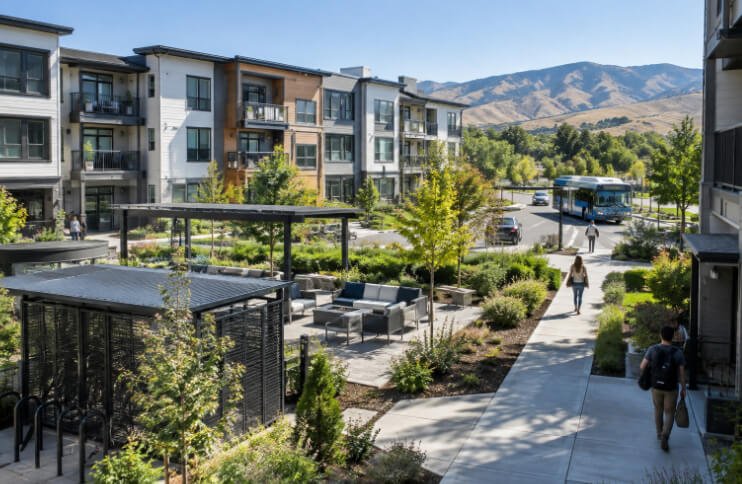
In Boise, apartment communities also fit into a broader network of streets, parks, schools, businesses, trails, and transit. Development should not act like an isolated island surrounded by parking. It can contribute to an active neighborhood by creating safe connections to sidewalks, bike routes, nearby services, and public spaces.
Small choices often produce the most noticeable benefits. Clear wayfinding at entrances, lighting near doors and parking areas, weather-protected mail and package zones, and storage for bikes, strollers, and outdoor gear all reduce friction. Flexible floor plans can also help residents make room for remote work, study, hobbies, guests, or family routines.
Consider a resident arriving home with groceries after work. A direct walk from the parking, a secure package room near the entrance, bike storage that does not require navigating stairs, and a nearby transit stop can save time and reduce hassle. These details may not be flashy, but they shape how easy a property feels to live in.
Walkability is more than a sidewalk. It includes safe crossings, useful destinations, lighting, shade, curb ramps, and routes that are easy to understand in every season. Residents should be able to meet common needs without facing unnecessary barriers, whether they travel on foot, in a wheelchair, with a stroller, by bike, or by bus.
Boise’s transportation options vary by neighborhood, so site planning should begin with a close look at surrounding connections. The local bus route network can help residents reach destinations across the Treasure Valley, but an apartment’s value depends on whether residents can safely and comfortably reach the bus stop from their front doors.
Shared amenities should solve real needs rather than simply fill a brochure. A modest workroom with reliable Wi-Fi, outlets, good lighting, and acoustic separation may be more useful than a large lounge without comfortable seating. Outdoor tables, reservable community rooms, fitness areas, pet-washing stations, and safe play spaces can each serve a clear purpose.
Good social design never requires residents to be social. Some people want to meet neighbors, while others value a quiet corner to read or work. The goal is to provide options that make connection possible without sacrificing privacy.
Outdoor areas are especially valuable in Boise when they offer usable comfort. Trees, planted courtyards, covered seating, benches, and evening lighting can make a short walk or a few minutes outside more inviting. Shade deserves early attention because paved areas can feel uncomfortable during hot weather, while wind protection and covered entries can matter in colder months.
Native or climate-suitable plantings can also be a sensible choice when paired with responsible irrigation and maintenance. Communities near paths and open space should support respectful access, too. The accessible trail information for Boise’s Ridge to Rivers system shows why route conditions, parking, surfaces, and access details matter for people with different mobility needs.
Wellness-focused housing does not need to make medical promises. It should focus on everyday comfort: effective ventilation, moisture control, stable indoor temperatures, daylight, easy-to-clean common areas, and sound control between homes. Natural light and views can make a home feel more pleasant, while responsive maintenance helps protect that comfort over time.
During a property tour, renters and buyers can ask practical questions about ventilation, filtration, insulation, noise transfer, maintenance procedures, and how quickly building concerns are addressed.
Efficient windows, insulation, heating and cooling equipment, lighting, appliances, and water fixtures can support lower resource use while helping homes stay comfortable. Durable materials and simple systems are often more valuable over time than features that look impressive but are difficult to maintain.
Resilience also belongs in the conversation. Stormwater planning, leak detection, appropriate landscaping, and backup power for key common systems can help a community prepare for disruptions and changing weather conditions.
Inclusive design helps far more people than those who need a formal accommodation. Step-free routes, readable signs, elevators, wider circulation areas, and kitchens and bathrooms with comfortable turning space can benefit older adults, parents with strollers, delivery workers, visitors, and residents recovering from an injury.
Apartment layouts should also adapt as lives change. A flexible second room can serve as an office, nursery, guest room, or hobby space. A community with a range of unit sizes and price points can better serve a wider mix of households.
See also: When Is Blockchain the Wrong Foundation for a Mobile App?
The most successful apartment communities in Boise focus on real-life experiences rather than just appearances. They are designed to facilitate easy navigation, provide quiet spaces, allow residents to enjoy fresh air, encourage neighborly interactions when desired, and maintain a connection to the broader city. By integrating practical homes with safe access, adaptable spaces, and sustainable environmental choices, apartment development can foster a more comfortable and connected Boise.