Newsletter Subscribe
Enter your email address below and subscribe to our newsletter

 ByJohn A
New York City rewards diners who plan around the shape of their day, not simply the most famous reservation. A useful list of the best restaurants in New York can spark ideas, but the right table depends on where you will be, how much time you have, and the experience you actually want. Whether you are visiting for a weekend or choosing a neighborhood dinner close to home, a smart restaurant plan leaves room for walking, subway delays, changing weather, and the simple pleasure of finding something appealing nearby.
New York City is compact on a map but can feel enormous when a meal requires multiple subway transfers or a long crosstown trip. A restaurant near your museum, hotel, show, park, or nightlife plans often makes for a better evening than a celebrated spot far away. Pick one dining area for each part of the day. If getting there requires more effort than the meal is worth, look more closely.
Start with the activity, then work backward. Estimate the time needed to leave, travel, and arrive, then decide whether the meal should be quick, relaxed, social, or celebratory.
Menu prices do not show the whole cost. Restaurant food and drinks are subject to the city’s combined sales tax rate of 8.875 percent, and gratuities, beverages, and service charges can further increase the final total. Set a per-person limit before browsing bookings, then check the current menu and policies. Lunch specials, bakeries, counter service, shared plates, and an earlier dinner can help a budget go further. Many travelers enjoy choosing one memorable meal, then letting breakfast and the rest of the meals stay casual and flexible.
Reserve popular dinner hours, weekend brunch, celebrations, and meals for larger groups. If dinner is tied to a show, concert, or ticketed event, book the restaurant first and build the timing around it. When prime time is unavailable, an earlier or later seating can be just as enjoyable. Before confirming, review the cancellation rules, deposits, time limits, and whether the restaurant seats a party only after everyone has arrived. Leave at least one meal open during a short trip. A busy bakery, diner, food hall stall, neighborhood café, or bar counter can become the meal you remember most.
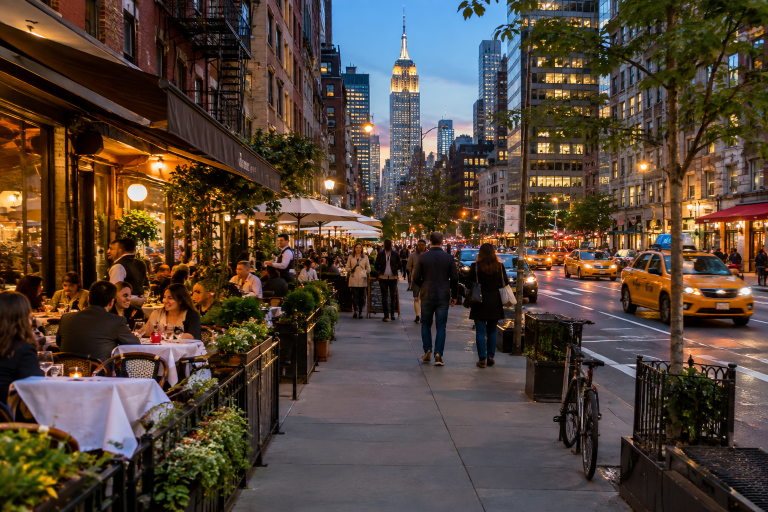
Outdoor seating can add people-watching and street energy, but it also brings traffic noise, weather, and different comfort levels. New York City now permits year-round roadway dining after legislation signed in August 2026, while restaurants still decide how and when to operate their own setups under year-round outdoor dining rules. Ask whether a table is covered, heated, shaded, or weather-dependent before you go.
Have breakfast near the hotel, eat lunch near the day’s main attraction, and reserve dinner close to the evening activity. This approach protects sightseeing time and limits unnecessary transit.
Choose a bakery or casual breakfast, make lunch the larger meal, and keep dinner simple. Decide in advance whether drinks or dessert are part of the plan.
See also: How Apartment Communities Can Support Healthier, More Connected City Living in Boise, Idaho
For couples, select a neighborhood that is enjoyable before and after dinner. For friends, favor shareable food, confirm the maximum table size, and discuss budget expectations before arriving.
A great New York City meal is not always the hardest reservation to get. It may be a polished dinner near a Broadway show, a quiet neighborhood table after a long walk, or an unplanned counter seat when everyone is tired and hungry. When location, timing, budget, and comfort align, the restaurant becomes part of the city experience rather than another item on the schedule. A little planning can help you avoid unnecessary travel, long waits, and meals that don’t fit your day. Check the menu, hours, reservation policy, and location ahead of time, but leave some room for changes once you are out exploring. Sometimes the most enjoyable meal is the one that fits naturally into the day rather than the one that took the most effort to book.